
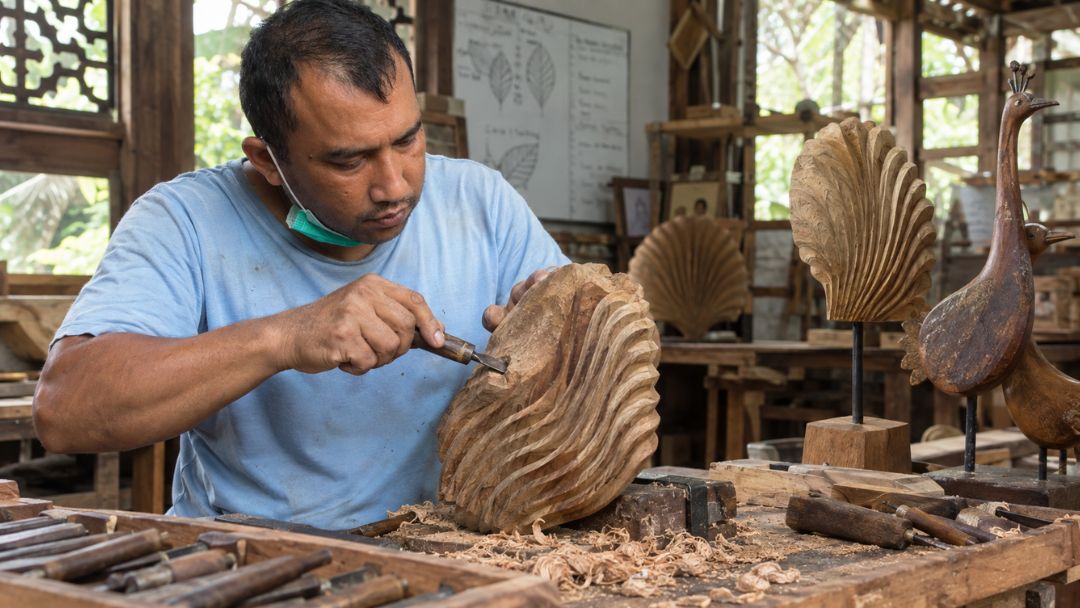
Traditional Balinese Woodcarving Techniques Preserved in Every TAGA Piece
Bali's woodcarving tradition stretches back centuries, deeply intertwined with the island's religious practices, architecture, and daily life. While contemporary product design has evolved to meet modern kitchenware and tableware needs, the underlying techniques used to shape and carve wood remain rooted in methods passed down through generations of Balinese craftsmen.
A Tradition Rooted in Religious and Cultural Practice
Historically, Balinese woodcarving developed primarily to serve religious and ceremonial purposes, producing intricate temple decorations, ceremonial objects, and architectural details found throughout the island. This origin shaped the technical standards and aesthetic sensibilities that continue to influence woodworking today, even as the application has shifted toward everyday functional items like kitchenware and home decor.
Many of the hand tools and carving techniques still used in workshops across Bali trace their origins directly to these traditional practices, preserved through generations of craftsmen who learned by watching and practicing alongside more experienced carvers rather than through formal technical education.
Key Techniques Still in Practice
Several traditional techniques remain central to how skilled Balinese artisans approach wood carving and shaping today, even when applied to contemporary product designs.
- Hand carving with traditional chisels, allowing for organic, varied shapes that machine tools struggle to replicate
- Reading and working with the natural grain of the wood rather than forcing uniform shapes against it
- Layered sanding techniques developed to achieve smooth finishes using traditional, non-mechanized methods
- Natural oil finishing techniques passed down as part of traditional craft knowledge, prioritizing food safety and durability
- An emphasis on individual craftsmanship over identical mass production, allowing subtle variation between pieces
Balancing Tradition with Contemporary Design
While the underlying techniques remain rooted in tradition, the products themselves have evolved considerably to meet modern needs. A skilled carver trained in techniques originally developed for temple ornamentation might now apply those same hand-eye coordination skills and understanding of wood grain to shaping a contemporary serving bowl or cutting board designed for international hospitality markets.
This blending of traditional skill with contemporary application allows Balinese craft producers to offer products that feel both authentically rooted in local heritage and genuinely functional for modern kitchens and dining settings around the world.
Why Preserving These Techniques Matters
As industrial manufacturing continues to dominate global kitchenware production, traditional hand carving techniques face genuine risk of disappearing if fewer young people choose to learn them. Every order placed with a producer that employs traditional techniques provides direct economic support that helps keep these skills economically viable, encouraging continued apprenticeship and skill transfer to younger generations.
Beyond the economic argument, preserving these techniques maintains an important piece of Balinese cultural heritage that extends beyond craft production into the island's broader identity and history.
What This Means for the Finished Product
Products made using traditional hand carving techniques carry subtle qualities that are difficult to replicate through purely industrial processes. Slight variations in curvature, texture, and finish reflect the individual hand that shaped each piece, giving buyers a product with genuine character rather than mechanical uniformity.
For hospitality businesses and retailers interested in offering guests and customers something with real cultural depth, products carrying this traditional craftsmanship provide a meaningful point of differentiation from mass-produced alternatives available through generic wholesale suppliers.
Teaching the Next Generation of Carvers
Preserving traditional woodcarving techniques depends entirely on whether experienced craftsmen have the opportunity and incentive to teach younger apprentices. Workshops that maintain steady order volume are better positioned to support this kind of mentorship, since apprentices need extended, low-pressure opportunities to practice techniques on real projects rather than learning purely through observation. Some workshops formalize this process further, pairing each apprentice with a specific mentor for an extended period rather than relying on informal, ad hoc instruction.
How Traditional Techniques Influence Contemporary Product Lines
Even entirely new product designs created for modern hospitality and retail markets often draw on traditional technique in subtle ways. A contemporary serving tray might incorporate a carved edge detail derived from motifs traditionally used in temple architecture, adapted into a simpler, more understated form suited to everyday use. This kind of quiet integration allows traditional craftsmanship to remain relevant and economically viable rather than being confined strictly to ceremonial or decorative objects with limited commercial application.
Own a Piece of Living Tradition
TAGA's products are shaped using traditional Balinese woodcarving techniques passed down through generations of skilled artisans. Contact our team to explore collections that combine authentic craftsmanship with designs suited for modern hospitality and retail needs.
