
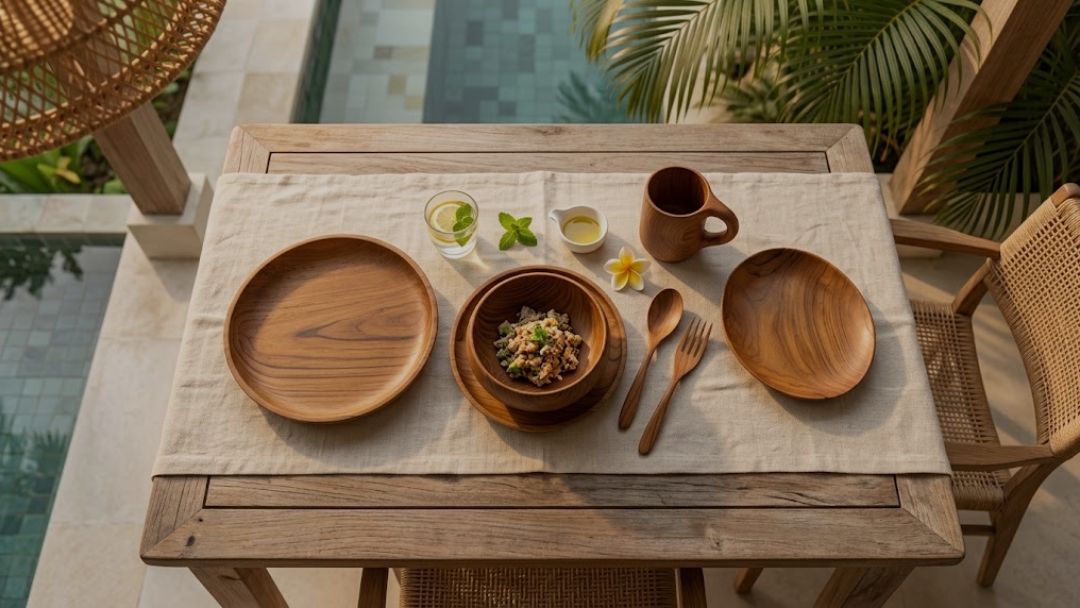
Why Sustainable Wooden Tableware Is the Smart Choice for Modern Hotels and Villas
Why Sustainable Wooden Tableware Is the Smart Choice for Modern Hotels and Villas : Hospitality brands today are judged on more than just comfort and service. Guests increasingly notice the small details: the materials on their dining table, the story behind their coffee cup, and whether a property's choices reflect genuine care for the environment. For hotels, villas, homestays, and restaurants competing for attention in a crowded market, sustainable wooden tableware has quietly become one of the most effective ways to meet these expectations while also improving daily operations.
The Shift Guests Are Already Making
Travelers, particularly those booking boutique villas and design-forward hotels, are paying closer attention to sustainability claims. A property that serves breakfast on single-use plastic or mass-produced melamine sends a very different message than one that presents a warm, handcrafted wooden platter with the same meal. The plate itself becomes part of the guest experience, not just a vessel for food.
This shift is not limited to eco-conscious backpackers. Luxury travelers, corporate retreat organizers, and wedding planners are asking the same questions: where do these materials come from, who made them, and what happens to them at the end of their life. Wooden tableware answers all three questions in a way that feels authentic rather than performative.
Why Wood Outperforms Plastic and Low-Grade Ceramics
Plastic tableware, even the reusable kind, degrades quickly under heavy hospitality use. It scratches, stains, and often ends up in landfills within a few years. Cheap ceramics chip easily and rarely tell a story that guests remember. Solid wood, by contrast, offers a combination of durability and character that improves with use rather than declining.
Each grain pattern is unique, which means no two pieces are ever exactly alike. For a hotel or villa aiming for a distinctive, non-generic look, this is a significant advantage. Wood also ages gracefully. With basic care such as occasional oiling, a wooden serving board or bowl can remain in daily rotation for years, reducing the frequency and cost of replacement compared to lower-quality alternatives.
There is also a practical safety benefit. Well-finished hardwood is naturally resistant to certain bacteria compared to plastic, which develops microscopic scratches over time that can trap food particles. For kitchens and dining operations that take hygiene seriously, this is a meaningful consideration alongside the aesthetic appeal.
Sustainability That Goes Beyond Marketing
Sustainability claims are easy to make and harder to prove. What separates genuine sustainable sourcing from greenwashing is traceability. Responsible wooden tableware producers work with selected hardwoods, often incorporating offcuts and lower-grade timber that would otherwise go to waste, and rely on skilled local craftsmen rather than industrial mass production.
This approach reduces the carbon footprint associated with manufacturing, supports rural economies, and results in fewer resources being extracted from forests overall. For hospitality businesses that want to communicate their environmental commitments honestly, sourcing tableware from producers who can explain exactly where the wood comes from and how it was processed adds real credibility to their sustainability story, whether that story appears on a website, a menu insert, or a conversation with a curious guest.
A Natural Fit for Villa, Resort, and Restaurant Aesthetics
Beyond the environmental argument, wooden tableware simply fits the visual language that most tropical and boutique hospitality properties are already working with. Rattan furniture, linen textiles, and open-air architecture pair naturally with warm wood tones. A wooden serving tray or set of bowls does not fight against this aesthetic the way a bright plastic tray might. Instead, it reinforces the sense of place, particularly for properties in Bali, Southeast Asia, and other destinations known for craftsmanship traditions.
For restaurants, wooden tableware also creates opportunities for more memorable food presentation. A dish served on a hand-finished wooden board photographs differently than one on a standard white plate, which matters enormously in an era where guests document their meals for social media before eating.
Practical Considerations for Hospitality Buyers
Switching to wooden tableware does not need to happen all at once. Many properties start with high-visibility items such as welcome trays, bread boards, or amenity sets before expanding into full dinnerware collections. When evaluating suppliers, hospitality buyers should look for a few key indicators of quality and reliability:
- Consistent finishing that protects against moisture without leaving a plastic-like coating
- Food-safe, non-toxic oils and sealants
- The ability to fulfill wholesale volumes with consistent quality across large orders
- Export experience, since international shipping introduces additional handling and customs requirements
- Clear communication about the wood species used and their sourcing
Working with a supplier who understands the specific demands of hotel, villa, and restaurant operations, rather than a general gift shop supplier, makes a noticeable difference in long-term satisfaction and product lifespan.
Bringing It Together
Sustainable wooden tableware sits at an unusually convenient intersection for hospitality businesses. It supports genuine environmental goals, reduces long-term replacement costs, strengthens brand identity, and enhances the guest experience all at once. For properties looking to differentiate themselves in a market where guests are paying closer attention to authenticity, this is not a minor styling decision. It is a strategic one.
As more hotels, villas, and restaurants shift toward materials that reflect both craftsmanship and conscience, wooden tableware is likely to move from a nice-to-have detail to an expected standard, particularly in destinations where natural materials and local heritage are already part of the brand story.
Ready to Upgrade Your Tableware?
If you manage procurement for a hotel, villa, homestay, or restaurant and want tableware that reflects genuine craftsmanship and sustainability, TAGA can help. Our wooden kitchenware, tableware, and gift sets are handcrafted by skilled artisans in Bali using responsibly sourced materials, with wholesale options and worldwide export available. Contact our team today to request a catalog, discuss custom orders, or start a sample trial for your property.
